
FOOTBALL
101
Whether you’re a seasoned veteran or new to the sport - Football 101 is here to help you understand the origins, terms, and rules of the game we play. Let’s celebrate 2026 together as we hit a milestone 50-year anniversary for our club, and cheer on Team Canada as our country jointly hosts the World Cup!
Language of Football
As you watch a game of football, you might hear some unfamiliar terminology:
Cap - Used to measure the number of times a player has played for their international team; traditionally dating back to when players were given hats or “caps” for each appearance.
Volley - A ball struck with the foot while in the air, with a difficult and often impressive feat of athleticism.
Back 3/Back 4 - Refers to the defensive line’s shape (see Shapes below).
Set Piece - A team’s strategic organization to create a scoring opportunity off a dead ball (corner kick or free kick).
Low Block - A defensive system where all 11 players collapse into a tight unit and don’t proceed past their half of the field.
High Press - A defensive system where all 11 players push high into the opponent’s half to force turnovers in a scoring position.
Park the Bus - A term used to describe a team taking absolute defensive measures by pulling all players in front of their net, often to protect a 1-goal lead.
Technical Area - The defined space along the touchline that a coach is allowed to move in. A coach cannot step outside of their technical area while the game is being played.
Switch the Play - Passing the ball either through the air or along the ground to the opposite wing to try to utilize the available space and catch opponents out of position.
Brace - A player who has scored two (2) goals in a single game.
Hat-Trick - A player who has scored three (3) goals in a single game.
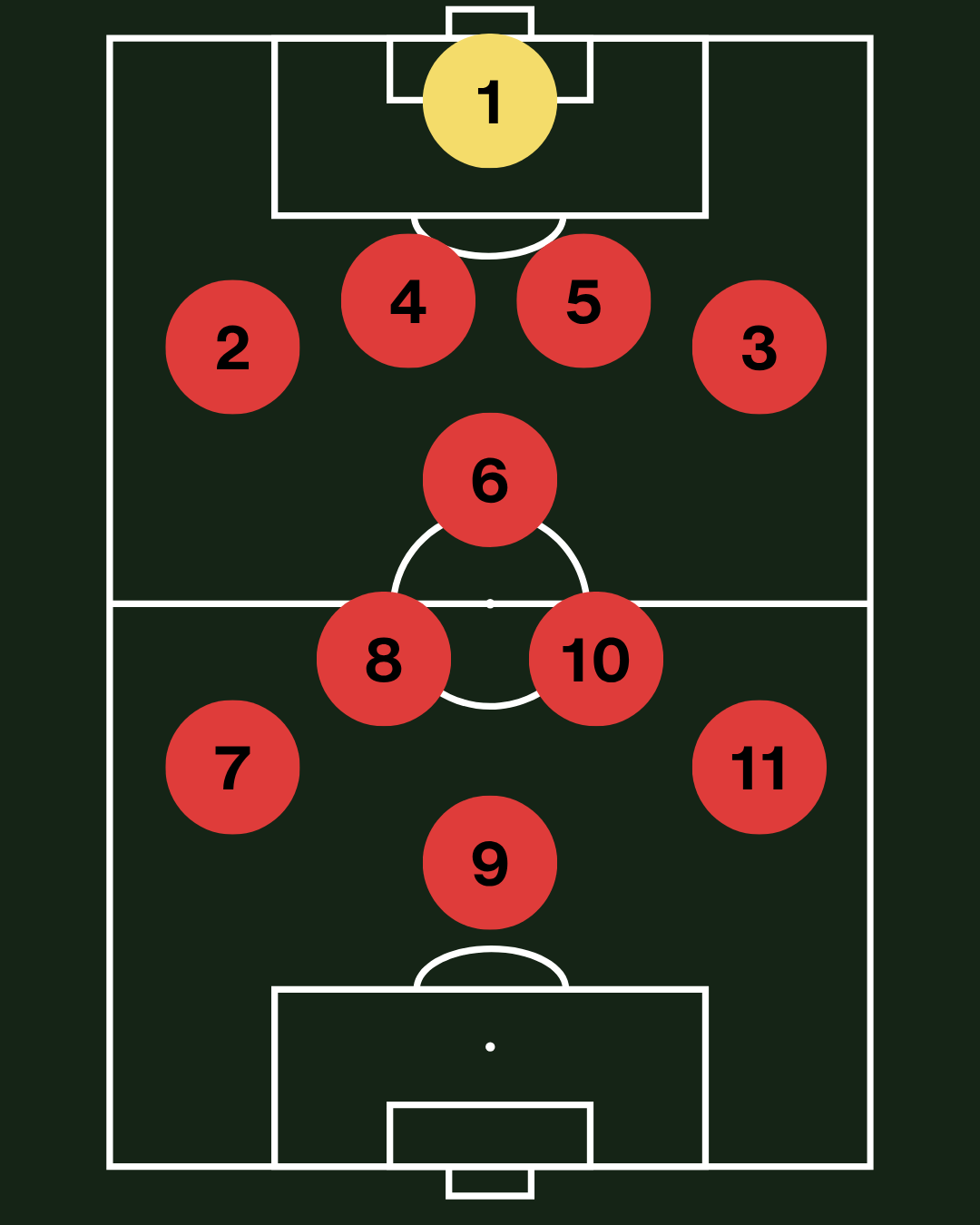
Football Positions
Defense:
#1: Goalkeeper
Recognizes when to play short vs long
Positions high as a support option
Reads pressure and finds solutions
Organizes defensive shape
#2 and #3: Wingbacks/Fullbacks
Links play between lines
Times forward runs effectively
Strong 1v1 defending awareness
Provides width to stretch the field
Recognizes when to overlap or support inside
Supports attacks in wide areas and creates overloads
#4 and #5: Center Backs
Supports rest of defense
Builds play from the back
Breaks lines with passes or dribbles
Creates passing angles in build-up
Recognizes pressing and escapes it
Maintains structure, balance and compact defensive shape
Midfield:
#6 and #8: Holding (6)/Central (8) Midfield
Connects defense to attack and creates passing options
Controls tempo and rhythm
Constant scanning before receiving
Positions to support all phases
Creates angles and space
#10: Attacking Midfield
Creates chances and attacking moments
Breaks lines with dribbling or passing
Exploits space in wide and central areas
Finds space between lines
Recognizes when to dribble vs pass
Interchanges positions fluidly
Presses immediately after loss of possession
#7 and #11: Wingers
Creates chances and attacking moments
Breaks lines with dribbling or passing
Exploits space in wide and central areas
Finds space between lines
Recognizes when to dribble vs pass
Interchanges positions fluidly
Presses immediately after loss of possession
Attackers:
#9: Striker
Leads attacking line
Occupies defenders
Times runs in behind
Recognizes pressing triggers
Creates space for teammates
Finishes scoring opportunities
Positions for crosses and cutbacks
Football Shapes
Different tactical shapes are used by managers (coaches) to try to exploit their team’s strengths and/or the opponent’s perceived weaknesses. Some shapes are designed to be balanced (4-3-3), some favour midfield (3-5-2), and other are more defensive in nature (5-4-1).
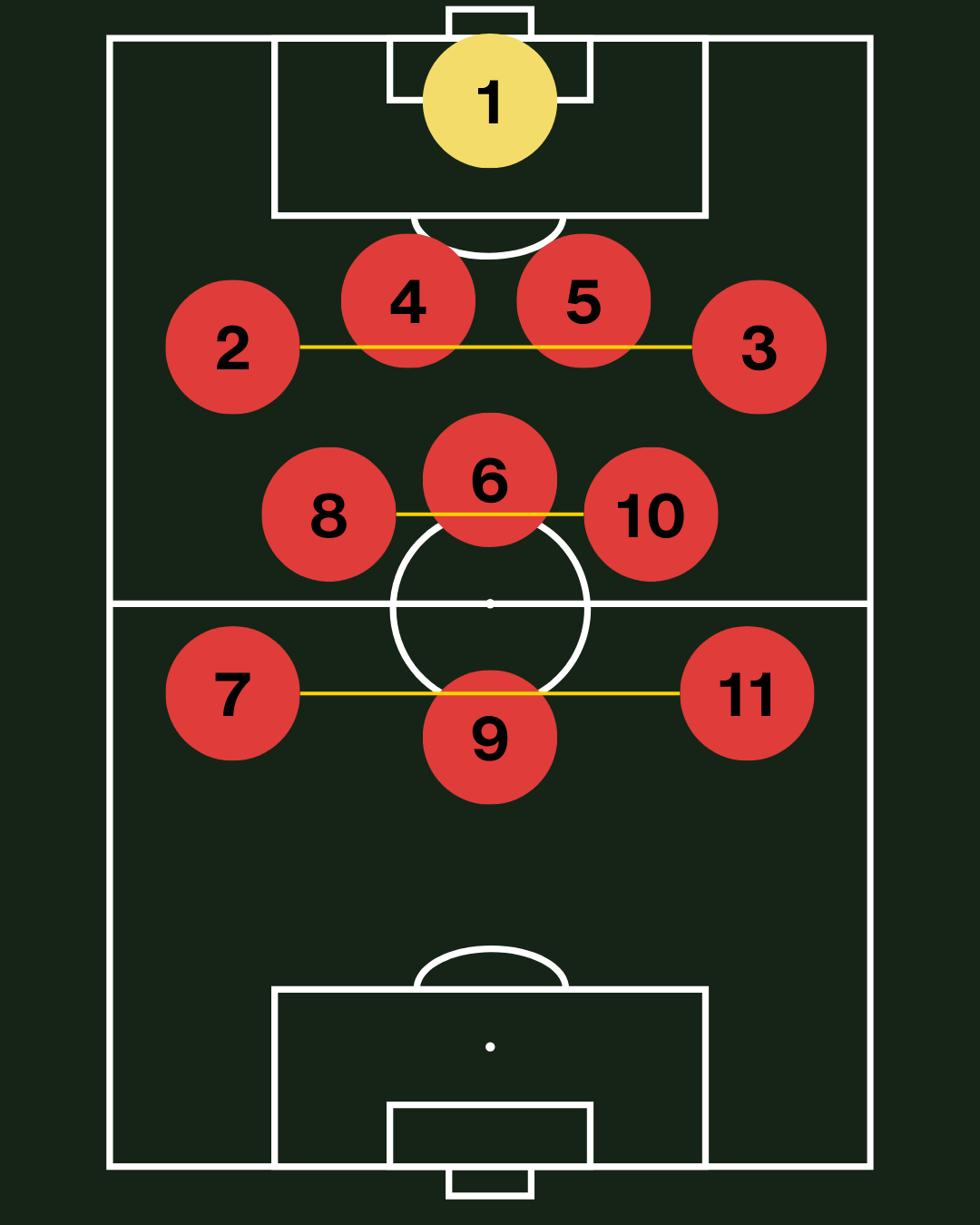
4-3-3
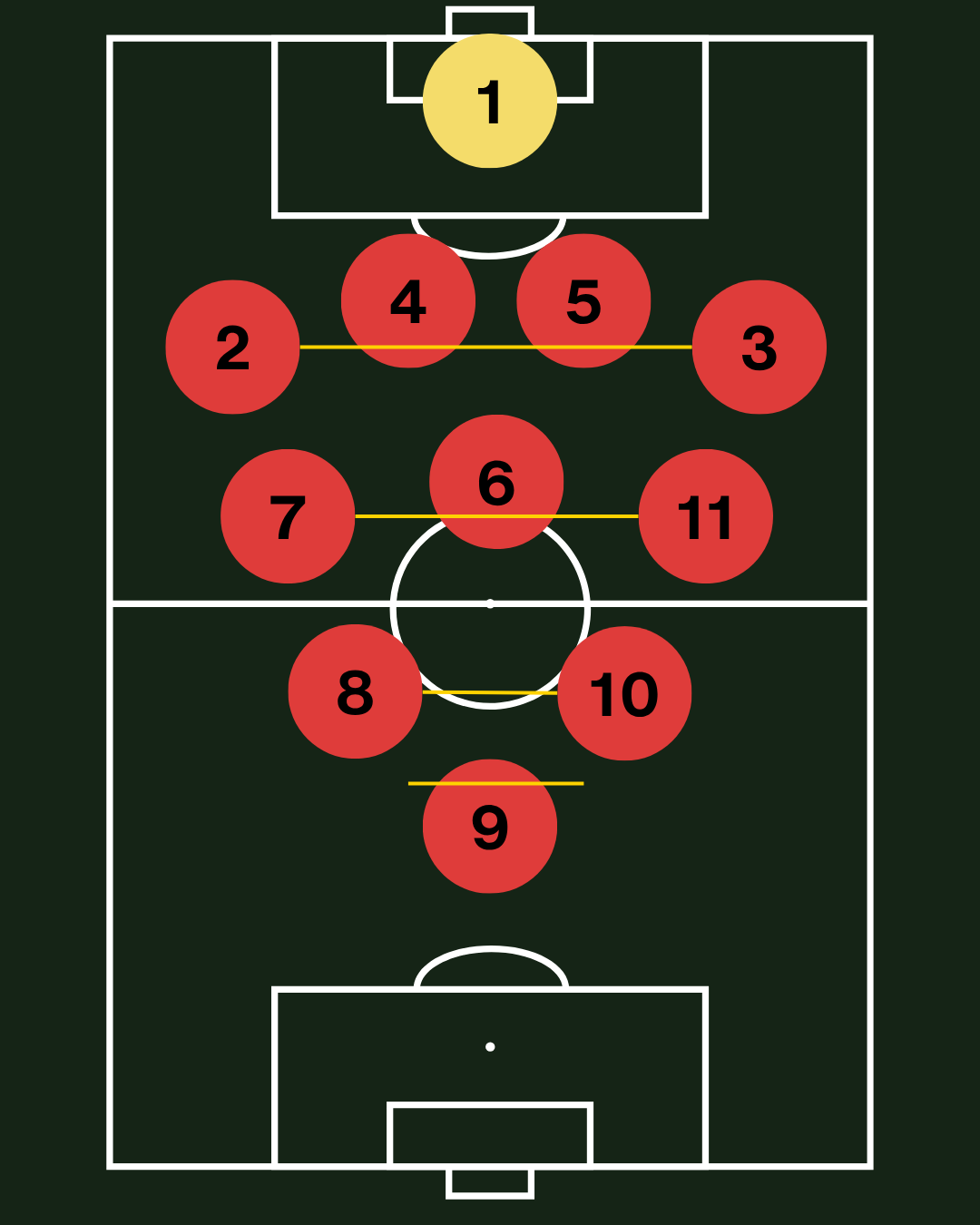
4-3-2-1
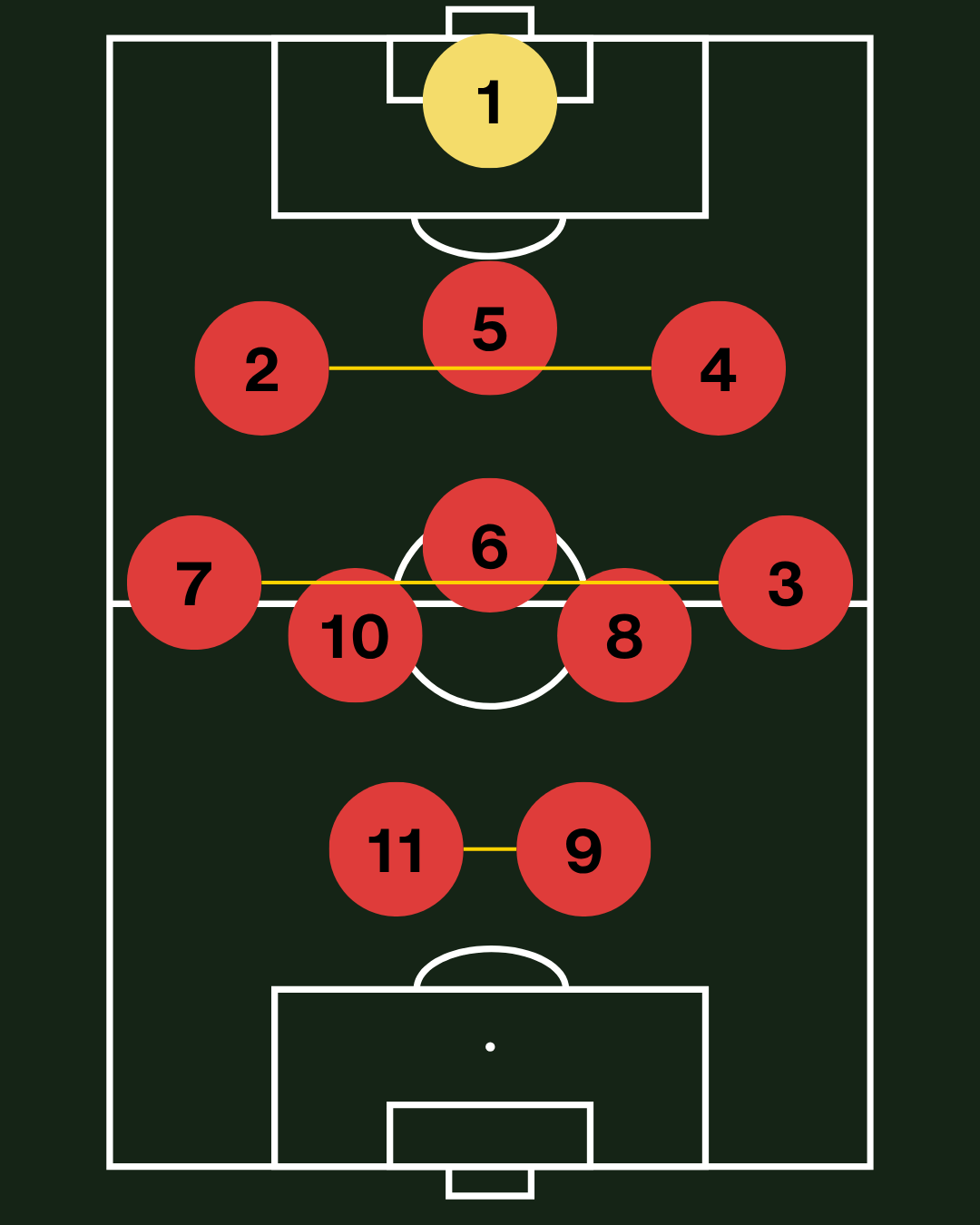
3-5-2
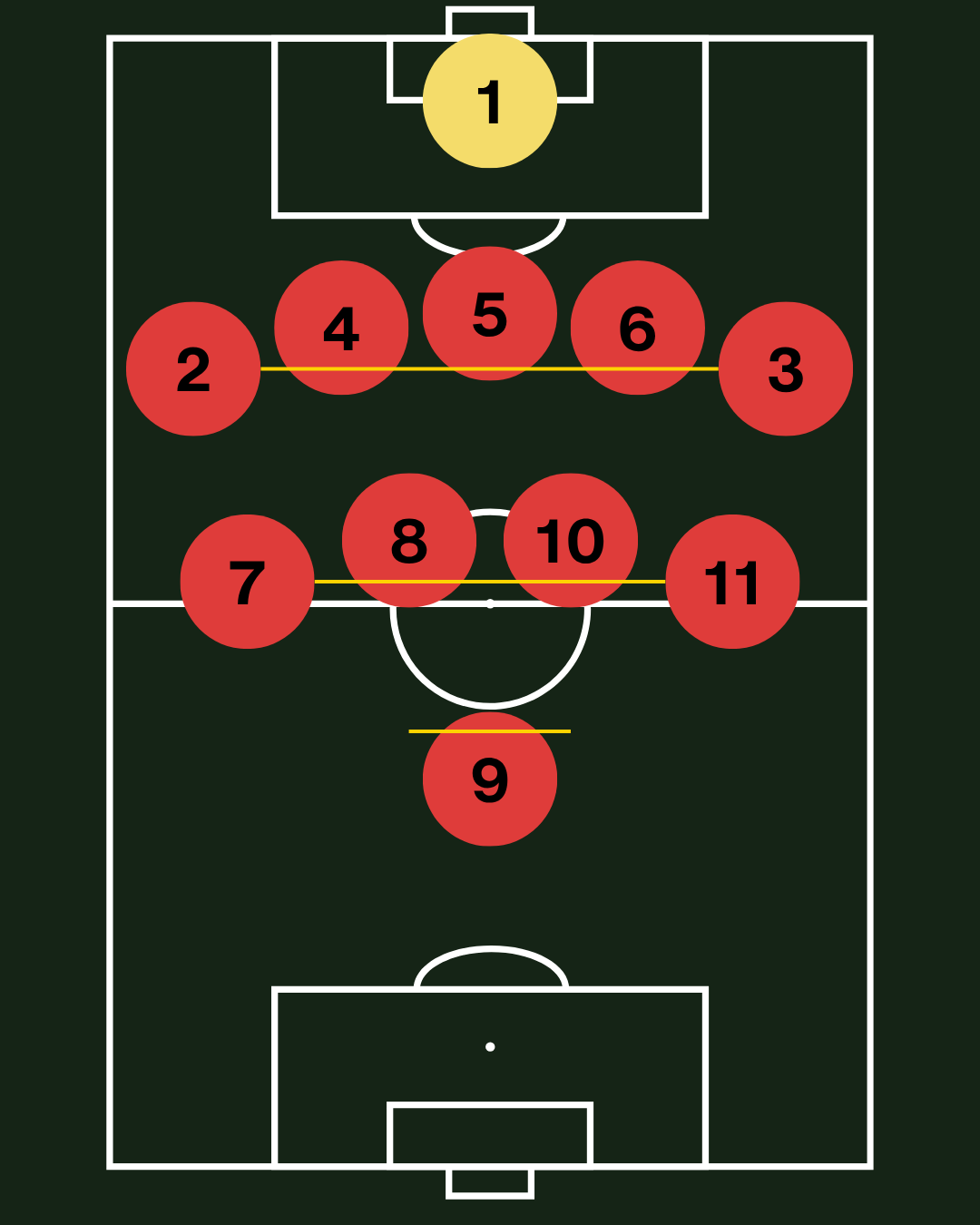
5-4-1